More Companies Are Promising Cloud Seeding Can Make Rain

0


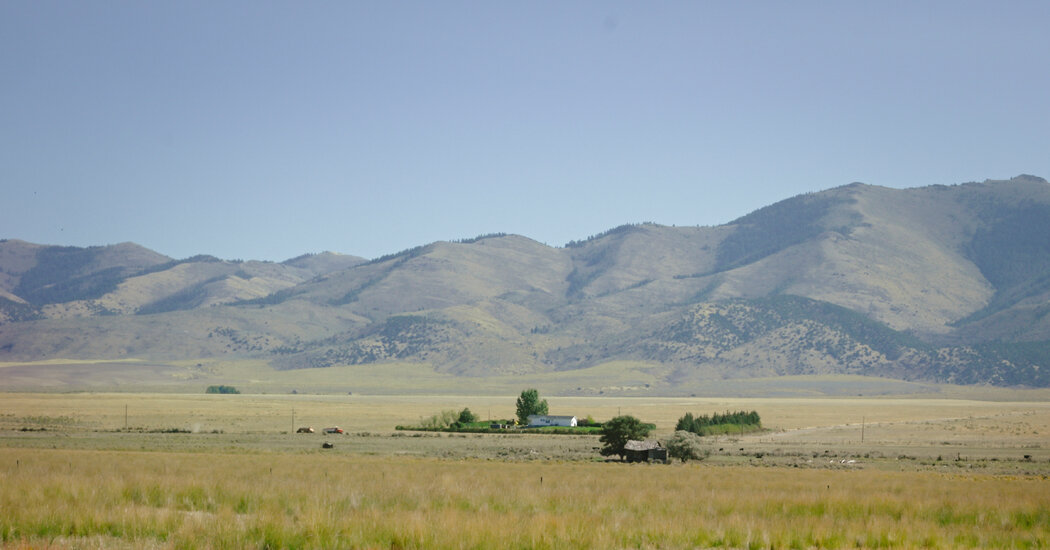
One answer to Utah’s brutal drought could be a large metal structure that looks like a football goal post at the foot of the La Sal Mountains near Moab.

The device sends pulses of electrical charges into the clouds, ions that the company that built it says brought 15 percent more snow to the mountains last winter. In a hot, dry Southwest, it’s a bold claim.

But a growing desperation for water is making it a persuasive one, too.

State agencies, water utilities, ranchers and ski resorts across the parched Western United States are increasingly spending millions each year on new ways to create more rain and snow. They’re betting on a growing body of research showing the interventions could squeeze at least a little bit more water from storm clouds.

The practice, known as cloud seeding, has been used for decades. It has typically involved injecting particles of silver iodide into clouds from airplanes or from the ground to nudge precipitation to fall. Drought fueled by climate change is driving a quest for new ways to try it.

“Everybody is looking to have extra water,” said Jonathan Meyer, a climatologist at Utah State University who studies cloud seeding. “That may be the new oil boom for the rest of this century.”

There’s been a flurry of companies developing new seeding materials that they say are cheaper and less toxic than silver iodide. Some are using drones to scatter them within clouds, rather than spreading them from airplanes or ground-based launch systems. They say their technologies can be used on more types of clouds and in different weather conditions, which means more chances to make it rain or snow.

The ionization device that looks like it belongs in the back of an end zone may be the most novel attempt. Rain Enhancement Technologies, the Florida-based company that developed and installed it in Moab, says the electrical charges help cloud droplets get bigger, faster. Its 26-foot-tall towers still seem like a fantasy to some at the Grand Water and Sewer Service Agency, a coalition of local water districts in Moab, said Kevin Clyde, who serves on its board. But the agency is thinking about chipping in $50,000, alongside money from the state, for two of the devices, each of which costs about $100,000 a year to lease, according to Rain Enhancement.

It’s a lot of money to spend without more proof that it works, Mr. Clyde said. But he thinks weather modification may be a gamble that places like Moab can’t afford to pass up. His wife runs a vegetable farm that is getting only half of its water allocation this year — a familiar scenario across the West.

“We’re always biting our fingernails to see if we’ll have enough water to get through the season,” Mr. Clyde said. “Perhaps we need to take some risk.”

The physics behind cloud seeding are relatively straightforward: When enough water vapor condenses inside of clouds, gravity pulls it to the ground. Scattering a substance like silver iodide in the cloud speeds things up: Ice builds up around each particle until it’s large enough to fall as rain or snow, depending on the temperatures below.

What had been less clear until recently was whether it increased rain or snow. That is changing as the ability of scientists to observe what happens inside clouds improves, along with models that simulate how a storm would have behaved without cloud seeding.

A 2017 study known as SNOWIE — Seeded and Natural Orographic Wintertime Clouds: The Idaho Experiment — delivered a breakthrough by observing cloud seeding in action, using radar and precipitation gauges to demonstrate that silver iodide worked as expected. Recent research has added more evidence.

The money has followed. A decade ago, a handful of Western states were each spending perhaps a few hundred thousand dollars a year on cloud seeding efforts, which for decades meant ground-based, propane-fuled systems that shoot silver iodide into clouds, said Kala Golden of the Weather Modification Association, an industry group. But the SNOWIE findings helped justify spending more, said Ms. Golden, who works as a project manager for another cloud seeding company, Weather Modification International.

State water agencies are driving much of the boom, including $5 million in Idaho and nearly $16 million in Utah. Millions more are spent in states including Colorado, Wyoming, California and Texas, Ms. Golden said. China is investing far more, though: an estimated $2 billion on weather modification from 2014 to 2021. Middle Eastern countries have also been investing in cloud seeding for years.

It’s still not clear exactly how much extra rain or snow the technologies can create. There’s no control cloud to compare against — either a cloud is seeded, or it isn’t — so assessing the technology involves comparing it with computer simulations and past events.

Utah estimates that its extensive cloud seeding efforts mean 6 to 12 percent more precipitation, creating as much as 200,000 acre-feet of water each year. An acre foot is the amount of water needed to cover one acre of land one foot deep, enough to supply two or three households for a year.

Rain Enhancement Technologies officials estimated its tower in the La Sal Mountains created an extra 8,750 acre-feet of water last winter, or enough to supply around 20,000 homes for a year. But that figure is still just an estimate, and potentially a conservative one, the company said.

All the uncertainty has led some companies to claim they can prove their technology works.

Recast Systems, a San Francisco-based firm that launched publicly this month, says the organic compound it is using to seed clouds in Texas and New Mexico gives off a signature visual wavelength that makes it traceable. It is working with researchers at Texas A&M University to show how the substance, a form of sodium chloride that’s chemically similar to table salt, performs compared with silver iodide, which is about 100 times more expensive, said Olivia Li, Recast’s founder.

If it works, that could help ease concerns about the environmental impacts of cloud seeding. States including Florida, Montana and Tennessee have banned weather modification technologies, including cloud seeding, prompted by such fears.

Silver iodide has been found to be harmful to phytoplankton and soil bacteria, which has raised alarm in some communities where it is used. Companies and scientists stress that it’s not toxic enough to affect humans. But alternative seeding materials could be welcome.

Then there are worries about unintended impacts — like the possibility that making it rain in one spot could reduce precipitation in other areas, or even trigger floods.

So far there is little evidence that cloud seeding in the West is robbing other parts of the country of moisture, executives and scientists say. That is in large part because there is so much water vapor available in the atmosphere overall, and no type of cloud seeding can wring every drop from any cloud.

And the companies say they avoid seeding clouds that might be carrying disastrous amounts of precipitation.

The World Meteorological Organization has warned that some studies suggest unintended downwind effects are possible, requiring “further investigation as part of any weather modification effort.”

Despite concerns, cloud seeding is growing in the West.

The dire drought and record-low reservoirs along the Colorado River, for instance, mean it won’t be possible to adapt just by reducing water consumption. States have been exploring desalination plants and water recycling to boost supplies, too.

Cloud seeding represents another tool, said Augustus Doricko, founder of Rainmaker, a company based in El Segundo, Calif., that’s using drones to seed clouds.

“By no means do I think just enough cloud seeding is going to save the day,” Mr. Doricko said. But in the interior Southwest, it is perhaps “the only means by which you can really generate new and consequential volumes” of water, he said.

That is alluring enough for Mr. Clyde in Moab. So far, even the rough estimate that it rained and snowed more in the La Sal Mountains only accounts for one year. But if things look similar or better next winter, he said, the gamble will have paid off.

“If it is working the way the science claims it will, it’s worth it to us,” Mr. Clyde said.

Leave a Reply

Your email address will not be published. Required fields are marked *