California Judge Says Recalled Officials Are Unlawfully in Office
Four officials in Avenal, Calif., who refused to step down after being recalled earlier this year are “not lawfully” in office, a judge ruled on Monday.
The officials — including the longtime mayor, who is part of the City Council, and three other council members — have remained in office since the April recall, arguing that it was unauthorized. The standoff has become one of the messiest recall battles in modern California history and a highly unusual case of election denialism.
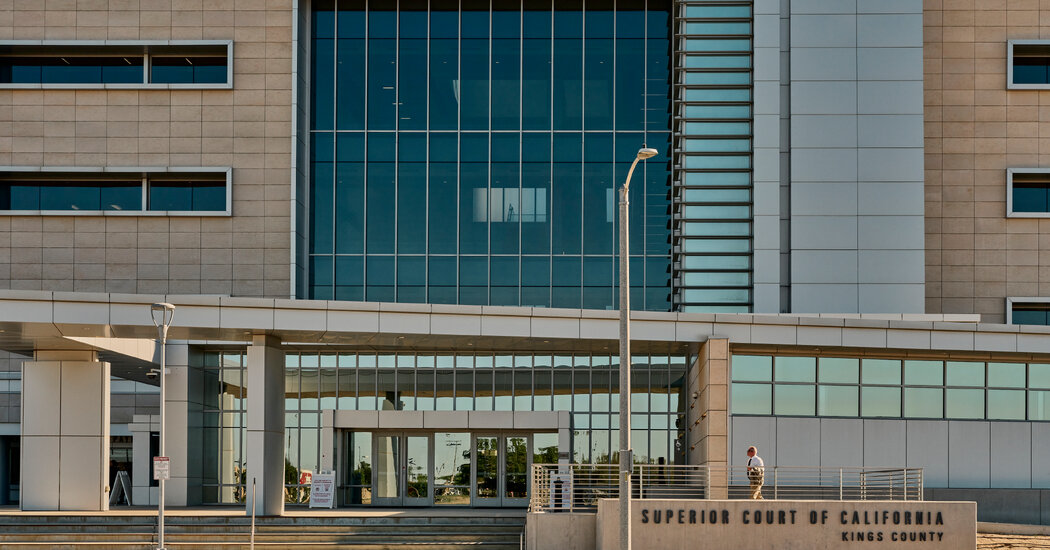
Judge Jennifer Giuliani of Kings County Superior Court ruled Monday that the four City Council members “do not lawfully hold or exercise their respective offices” and that the positions have been “vacant” since the election results were certified on May 28.
“The ultimate issue is not close. The court must uphold the will of the electorate, and Avenal voters have spoken decisively,” Judge Giuliani wrote in her decision. She said that while there was a procedural irregularity in the way the election took place, that did not affect its results or merits.
“To hold otherwise,” Judge Giuliani said, would “thwart the democratic will.”
The court also ruled that the recalled mayor, Alvaro Preciado, was eligible to place his name on the ballot for the city’s upcoming general election on Nov. 3.
“We respect the court’s decision,” Antony V. López, the city manager, said in a statement. “We also believe today confirms that the city was right to bring these questions before a court rather than simply surrender its municipal authority.”
Mr. López is not an elected official, but has publicly sided with the four recalled City Council members. He said they planned to immediately step down.
With only one council member remaining, the city will not have a quorum to hold meetings until after the November election, Mr. López said.
A lawyer for the city said the recalled council members might appeal some elements of the case after the November election.
Avenal is a city of fewer than 14,000 people, tucked about halfway between Los Angeles and San Francisco in California’s Central Valley. Its economy relies on a landfill and a large state prison, whose inmates make up just over a quarter of the population. A majority of residents identify as Hispanic or Latino.
Some residents began organizing the recall last year, fed up by what they described as a lack of transparency from city leaders, as well as fears that the landfill was contaminating the community, among other frustrations.
In April, more than 76 percent of voters supported recalling Mr. Preciado and three other council members, Leticia Gamez, David Reynosa and Pablo Hernandez. The only other council member, Ricardo Verdugo, was not on the recall ballot because the organizers saw him as an ally, they said.
After the officials refused to step down, the California attorney general granted the recall organizers permission to sue them in the quo warranto lawsuit — a rarely used legal remedy that examines a person’s right to hold a public office.
Separately, the district attorney’s office for Kings County has opened a criminal investigation, ordering raids on City Hall, as well as on the homes of the recalled officials and the city manager. It also demanded that the recalled officials stop spending taxpayers’ money. That investigation is ongoing.

Dalila Barajas, a 50-year-old resident who helped lead the recall effort, said she was “jumping for joy” after waiting months for the officials to step down.
“If Avenal did it, being such a small town,” Ms. Barajas added, “I think other little towns could follow through and also fight for their rights, fight for their freedoms, fight for democracy.”